 |
 |
 |
 |
|
 |
|
Erysipelothrix rhusiopathiae |
|||||||||||||||
|
Characteristics
Shape and Size
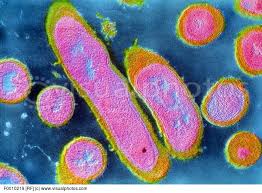
rod-shaped,
Genome Information
Erysipelothrix rhusiopathiae str. Fujisawa, Ref Seq: NC_015601.1, DNA circular, Size 1.79(Mb), GC% 36.6, Protein 1661, rRNA 21, tRNA 55, Gene 1747 http://www.ncbi.nlm.nih.gov/genome/2104
Food Source
ingestion of contaminated food products
Pathological Factor
The virulence of E. rhusiopathiae is associated, with resistance to phagocytosis by polymorphonuclear leukocytes, but even if phagocytized, it is able to replicate intracellularly. The antiphagocytic ability of this organism likely results from its possession of a capsule. Other virulence factors include enzymes, such as neuraminidase and hyaluronidase and surface proteins.
Disease
Erysipeloid, Septicaemia and endocarditis. Miscellaneous infections; chronic arthritis, cerebral infection, osseous necrosis
Symptoms
Focal infections such as brain abscess, meningitis, epidural abscess, paravertebral abscess, endophthalmitis, pneumonia, osteomyelitis, septic arthritis, prosthetic joint infection, necrotizing fasciitis, liver abscess, intra-abdominal abscess, and peritonitis have also been reported
Affected Body Organs
hand or fingers, peculiar aortic valve of heart, brain, liver
|
||||||||||||||||
|
||||||||||||||||