 |
 |
 |
 |
|
 |
|
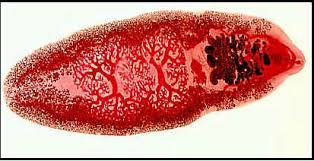
Fasciolopsis buski |
|||||||||||||||
|
Characteristics
Shape and Size
Leaf-shaped,length upto 7.5 cm and width 2.5 cm.
Genome Information
whole genome not resolved
Food Source
ingestion of infested water plants or water (intermediate host:amphibic snails)
Pathological Factor
F buski, which causes fasciolopsiasis, attaches to the duodenal and jejunal mucosa; however, in severe infections, it may attach to the ileum or colon. In the human duodenum, the metacercariae attach to the walls and become adult worms in approximately 3 months. The adult worm (see image below) causes traumatic, toxic, and obstructive damage to the intestinal mucosa. Deep inflammatory ulcerations develop at the site of attachment. Large numbers of worms provoke excess mucous discharge and can obstruct the lumen. The adult worm metabolites can also cause intoxication and sensitization when absorbed via the lumen. A recent case report provides evidence of heavy infestation as a risk factor for intestinal perforation.
Disease
Fasciolopsiasis
Symptoms
abdominal pain, diarrhea, intestinal obstruction, abdominal pain, nausea, vomiting, and fever.
Affected Body Organs
gastrointestinal organs
|
||||||||||||||||
|
||||||||||||||||