 |
 |
 |
 |
|
 |
|
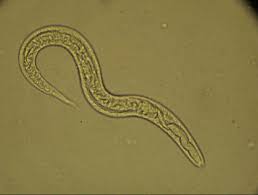
Strongyloides stercoralis |
|||||||||||||||
|
Characteristics
Shape and Size
males grow 0.9 mm and females grow 2.0 to 2.5 mm
Genome Information
Strongyloides stercoralis genome assembly S_stercoralis_PV0001, linear DNA, GenBank: LL999048.1, lenght 4.98 Mb, GC%: 22.1 https://www.ncbi.nlm.nih.gov/nuccore/LL999048.1
Food Source
vegetables, herbs and fruits
Pathological Factor
Human infection is acquired by penetration of the skin or mucous membranes by infective filariform larvae, either from autoinfection or from contact with infected soil or other material contaminated with human feces (fecal-oral route) (see the image below). This is facilitated by a potent histolytic protease that is secreted by the organism. At the portal of entry, the larvae cause petechial hemorrhages, which are accompanied by intense pruritus, congestion, and edema. The larvae migrate into the pulmonary circulation via the lymphatic system and venules. Larvae migrate up the pulmonary tree, where they are swallowed, and reach the GI system. In the intestine, S stercoralis can produce an inflammatory reaction and induce a malabsorption syndrome when it attaches to the mucosal folds.
Disease
Strongyloidiasis
Symptoms
upper abdominal pain or burning, diarrhea or alternating diarrhea and constipation, cough, rash, red hives near the anus, weight loss
Affected Body Organs
gastrointestinal organs, skin, lungs, lymphatic system
|
||||||||||||||||
|
||||||||||||||||