 |
 |
 |
 |
|
 |
| Mucor circinelloides | ||
Click for Details |
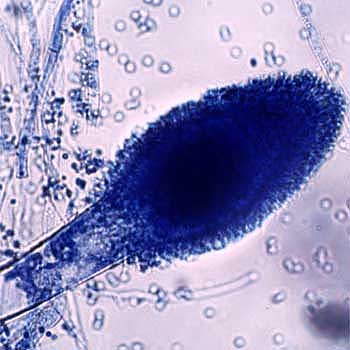
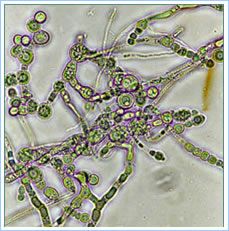
Mucor is saprophytic fungus and grows on dead organic material. The body of Mucor is composed of a mass of white, delicate, cottony threads collectively known as mycelium. Fungus is heterotrophic in their mode of nutrition. Each thread of the mycelium is known as hypha which is aseptate. | |
| Aspergillus flavus | ||
Click for Details |
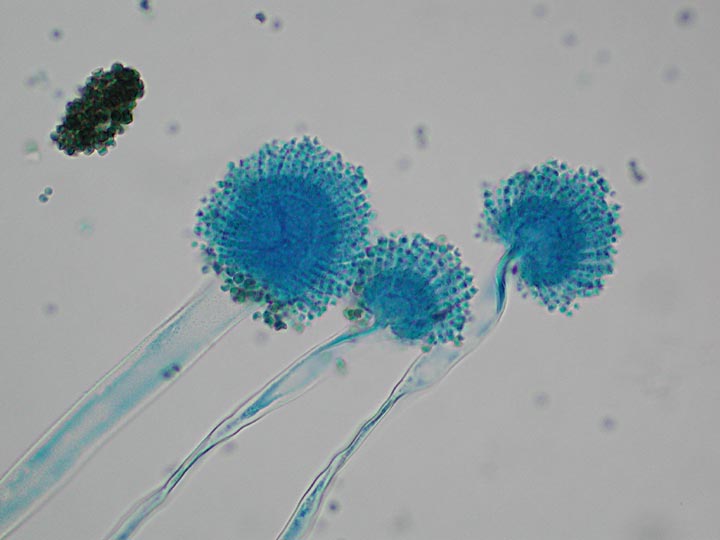
Aspergillus flavus is a saprotrophic and pathogenic fungus. It is best known for its colonisation of cereal grains, legumes, and tree nuts. A. flavus is also an opportunistic human and animal pathogen, causing aspergillosis in immunocompromised individuals. They have also been isolated in air-conditioning systems. | |
| Aspergillus parasiticus | ||
Click for Details |
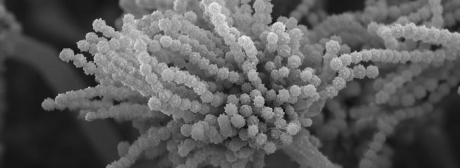
Aspergillus parasiticus is a mold, known to produce alfatoxin which is a potent liver carcinogen. A. parasiticus produces aflatoxins B1, B2, G1 and G2. | |
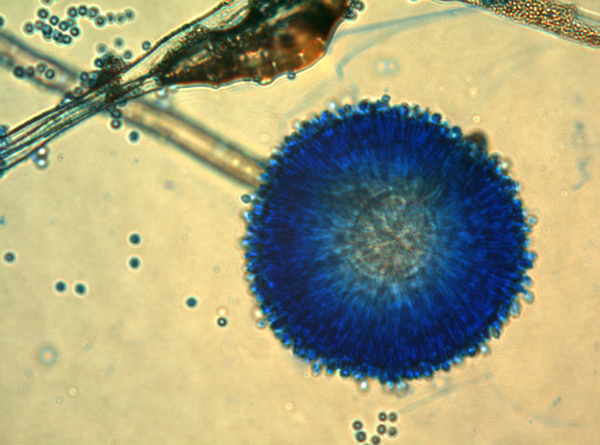
| Aspergillus ochraceus | ||
Click for Details |
Aspergillus ochraceus is a mold species in the genus Aspergillus known to produce the toxin ochratoxinA, one of the most abundant food-contaminating mycotoxins, and citrinin. It is a filamentous fungus in nature and has characteristic biseriate conidiophores. In humans and animals the consumption of this fungus produces chronic neurotoxic, immunosuppressive, genotoxic, carcinogenic and teratogenic effects. | |
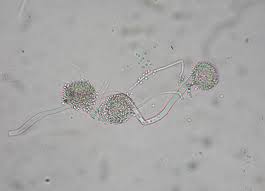
| Aspergillus versicolor | ||
Click for Details |
Aspergillus versicolor is a slow-growing filamentous fungus.The most important species in the "Aspergillus versicolor group". commonly found in damp indoor environments and on food products. It is widely distributed in foods particularly stored cereals, cereal products, nuts, spices and dried meat products. The reported minimum temperature for growth is 9 C at aw 0.97 and the maximum temperature is 39 C at a w 0.87. | |
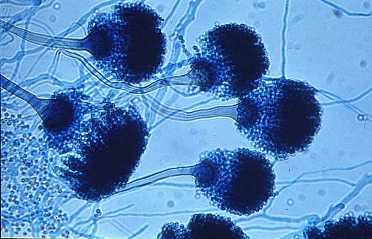
| Aspergillus fumigatus | ||
Click for Details |
It is a thermophile with a temperature range for growth of between 10 and 55 C and an optimum between 40 and 42 C. It is one of the least xerophilic of the common aspergilla.It is best found in decaying vegetation, in which it causes spontaneous heating.It is best recognized as a human pathogen causing aspergillosis of the lung. It is isolated frequently from foods particularly stored commodities. | |
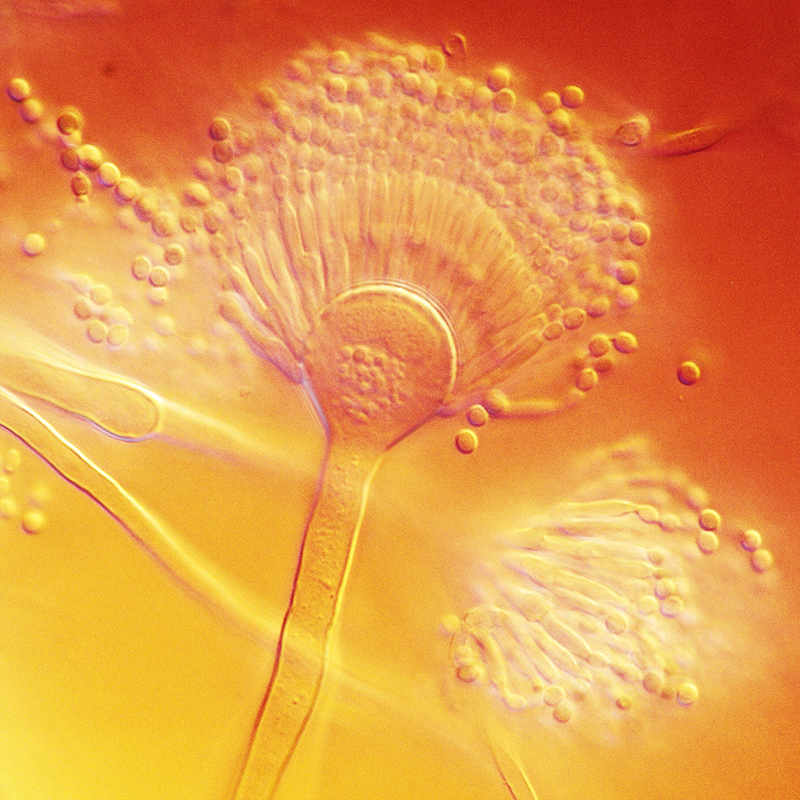
| Aspergillus terreus | ||
Click for Details |
Aspergillus terreus occurs commonly in soil and foods particularly stored cereals and cereal products,beans, pulses and nuts. Produces rapidly growing pale brown colonies, with Aspergillus heads bearing densely packed metulae and phialides with minute conidia borne in long columns. | |
| Aspergillus clavatus | ||
Click for Details |
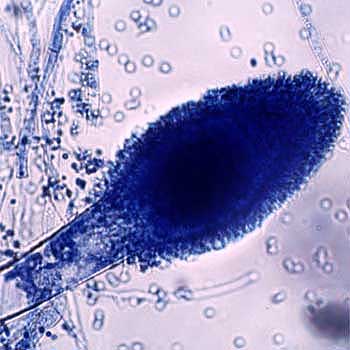
It is found in soil and decomposing plant materials and is easily recognizable by its large blue-green club-shaped heads. It is especially common in malting barley | |
| Eurotium repen | ||
Click for Details |
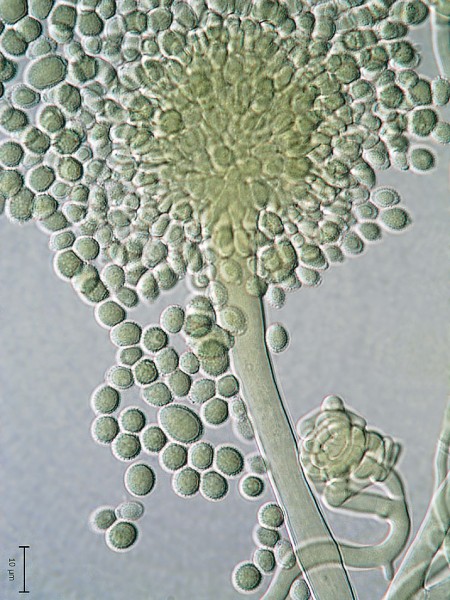
All Eurotium species are xerphilic. E. Repen are one of important spoilage moulds in all types of stored commodities like stored grains, spices, nuts and animal feeds.An ascomycete characterized by whitish to bright yellow spherical fruiting bodies (cleistothecia) containing spherical asci which in turn each enclose eight colourless ascospores. | |
| Penicillium expansum | ||
Click for Details |
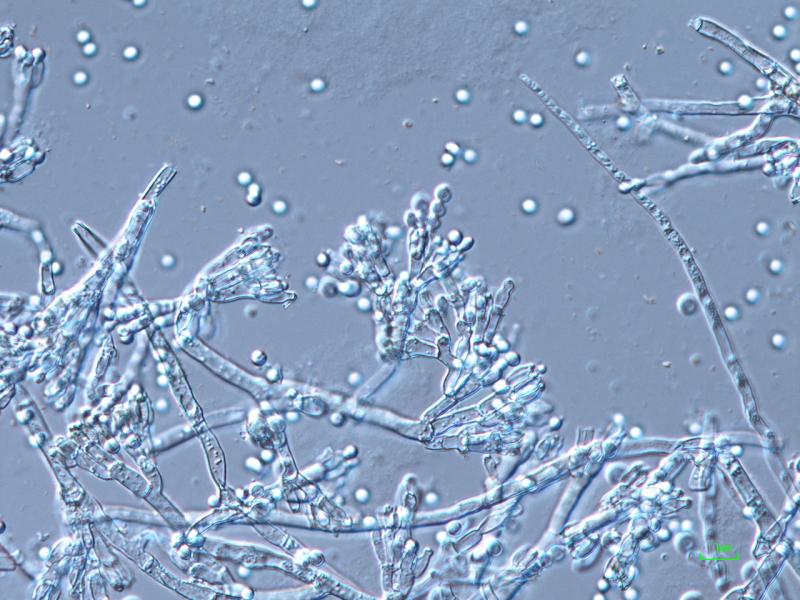
Classification of the penicillia is based on microscopic morphology. The genus Penicillium is divided into subgenera based on the number and arrangement of phialides and metulae and rami on the main stalk cells. | |
| Penicillium citreonigrum | ||
Click for Details |
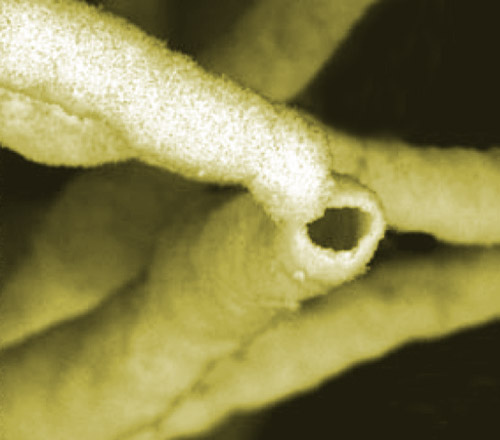
P. citreonigrum is not a commonly isolated species, but it is widely distributed.P. citreonigrum grows in rice after harvest, when the moisture content reaches 14.6%. At 1% higher moisture, other fungi will overgrow it, so the moisture band for invasion is narrow. The fungus is reported to be favoured by the lower temperatures and shorter hours of daylight occurring in the more temperate rice growing areas. The Oriental disease known as "beriberi" has traditionally been regarded as a nutritional disease, an avitaminosis. However, beriberi is more than a single disease, and one form of it, known in Japan as acute cardiac beriberi, has been established to be a mycotoxicosis. Acute cardiac beriberi in Japan is now only of historical interest. However, P. citreonigrum and Citreoviridin may still occur in other parts of Asia. Citreoviridin is also produced by P. ochrosalmoneum | |
| Penicillium citrinum | ||
Click for Details |
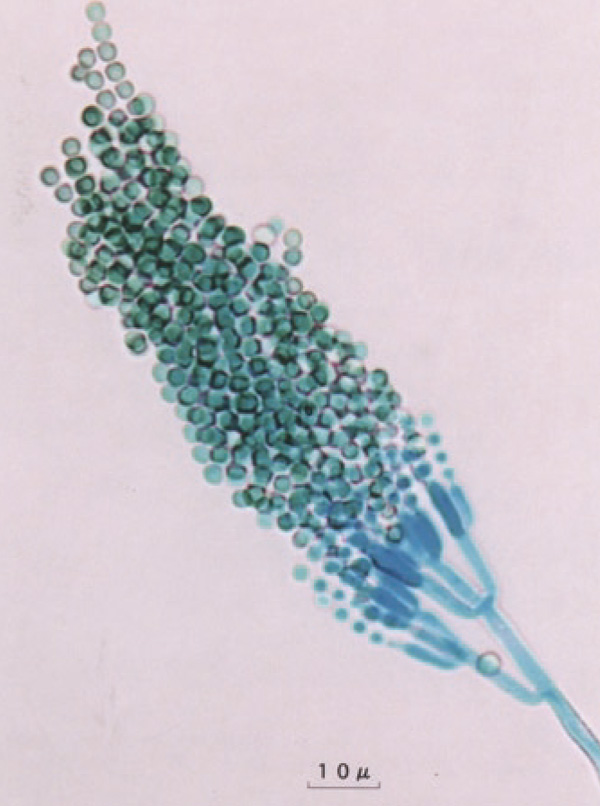
P. citrinum has been a well recognised species for most of this century. Its importance in the present context lies not so much in the production of a mycotoxin of particular human significance, but in its ubiquity, so that any toxins produced can be expected to be very widely distributed in food and feed supplies. P. citrinum is the major producer of citrinin, | |
| Fusarium graminearum | ||
Click for Details |
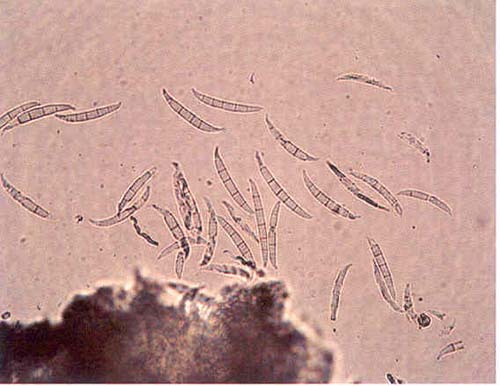
Fusarium is one of the most important genera of plant pathogenic fungi on earth, with a record of devastating infections in many kinds of economically important plants. Fusarium species are responsible for wilts, blights, root rots and cankers in legumes, coffee, pine trees, wheat, corn, carnations and grasses. The importance of Fusarium species in the current context is that infection may sometimes occur in developing seeds, especially in cereals, and also in maturing fruits and vegetables. An immediate potential for toxin production in foods is apparent. | |
| Aspergillus niger | ||
Click for Details |
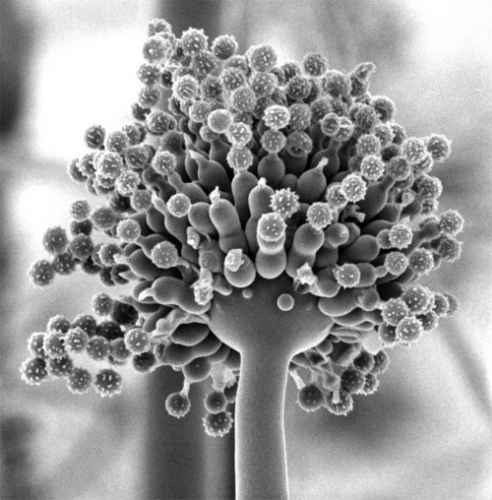
A. niger, the black mold is a filamentous fungus mostly found on decaying plant materials, soil, icy grounds, marine and indoor enviroments. It plays important role in degradation and recycling of dead plant elements. It is both pathogenic and economically important fungus. As a pathogen it commonly causes ear and lungs infection in human and birds. It transmits into humans by inhalation of airborne conidia. As a economically important fungus, it plays a significant role for the industrial production of citric and gluconic acids, ?-amylase and glucose oxidase and many other enzymes. | |
| Candida albicans | ||
Click for Details |
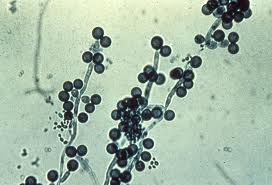
C. albicans is a encapsulated, diploid and polymorphic fungus. Two main morphologies are well recognized, one is budding unicellular yeast form and second is filamentous hyphal form. Many cell shape morphologies are there in between these forms termed as 'pseudohyphae'. It is an opportunistic pathogen which lives in the mucous membranes of the human mouth and intestine as a part of gut flora, vaginal tract, skin and other mucus membranes. When its population goes beyond to control due to the weak immune system, it weakens the intestinal wall, penetrates through into the bloodstream and releases toxic byproducts throughout the body. | |
| Chrysosporium tropicum | ||
Click for Details |
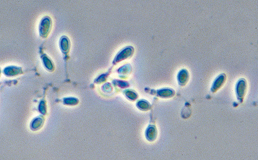
C. tropicum is a potent keratinophilic filamentous fungus that uses keratin as a substrate for its degradation. Animal hair, poultry feathers, wools, horns, hoofs, nails, cornified epridermis are the major sources of keratin. This fungus is found mainly in soil, plant material, dung, and bird feathers. It works both as important (a keratinophilic saprophyte ) and pathogenic fungus. It degrades various unsoluable keratinous waste into soluable low molecular weight components. It not only degrades the wastes hairs etc. but also a reason of hair loss in humans. | |
| Lacazia loboi | ||
Click for Details |
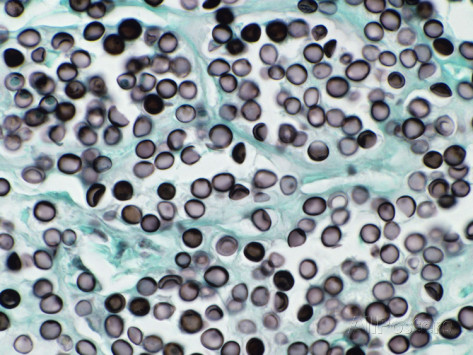
L. loboi is an uncultivated fungal pathogen of humans and dolphins. It is connected by its tubules within the tissue of infected organism. L. loboi thrives in aquatic environment and survive on the dying or decaying materials. The fungus mainly infects cutaneous and subcutaneous skin by developing parakeloidal lesions near cooler areas of the body. It kills the cells of the skin and feed off of that to grow and spread. The biological and epidemiological characterstics of L. Loboi remain unknown due to its strong resistance to in vitro cultivation. | |
| Microsporum ferrugineum | ||
Click for Details |
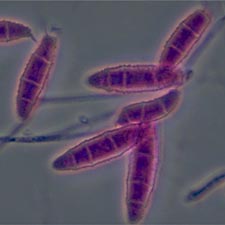
M. ferrugineum is a slow growing, strictly anthropophilic dermatophyte. It generally does not form microconidia and occasionally produces macroconidia in its life cycle. It has a morphology of highly segmented, long, straight and bamboo-like thick walled hyphae. Its only known reservoir is human, mostly children. It causes infections of hairs, nails and skin. Transmission of the dermatophytes can occur via person-to-person contact, and health care workers unknowingly may spread the disease, or it can be transmitted from an infected animal to a person | |
| Microsporum gypseum | ||
Click for Details |
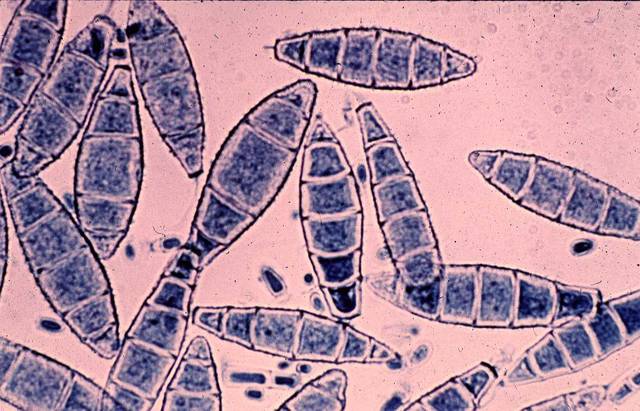
M. gypseum is a geophilic dermatophyte and oppurtunistic pathogen. This species of Microsporum relatively grows faster. Its colony is look like powdary to granulary. Color of the colony beige to cinnamon brown. From the reverse, it is yellow to brownish red. It is isolated from the soil or aqueous soil. It causes diseases rarely in humans, depending upon the patients immune power that resist against the infectious agents. | |
| Trichophyton rubrum | ||
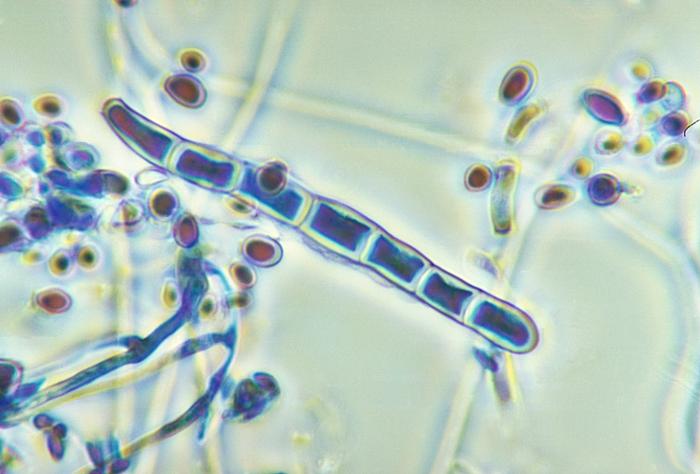
Click for Details |
Trichophyton rubrum is a cosmopoliton anthroppphilic mold fungus. It grows from slow to moderately rapid. It is downy to cottony like morphology with white color surface. From the reverse it is in wine red color. It can be isolated from tropical areas, soil, humans and animals. It generally not infect animals. But in human it plays a major role in dermatophyte infections. It affects mainly on feet, skin, nails and hairs. | |