 |
 |
 |
 |
|
 |
|
Microsporum ferrugineum |
|||||||||||||||
|
Characteristics
Shape and Size
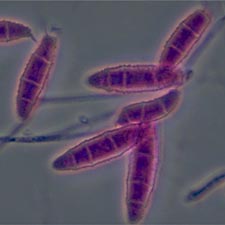
macroconidia are spindle shaped, echinulate, thick-walled, 40-47 by 8-11 µm in size with 2-8 septa
Genome Information
genome not found
Food Source
contaminated water
Pathological Factor
Dermatophytes are unique in that they produce keratinase, which enables them to use keratin as a nutrient source. This fungal pathogen derive their nutrition from the keratin rich parts of human body such as nails and hairs.
Disease
juvenile tinea capitis in humans
Symptoms
Skin ringworm lesion
Affected Body Organs
skin
|
||||||||||||||||
|
||||||||||||||||