



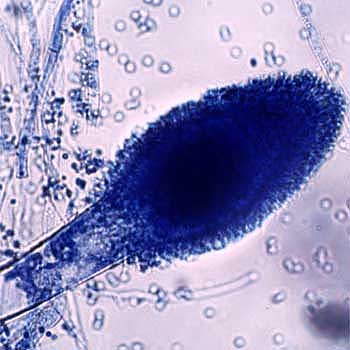
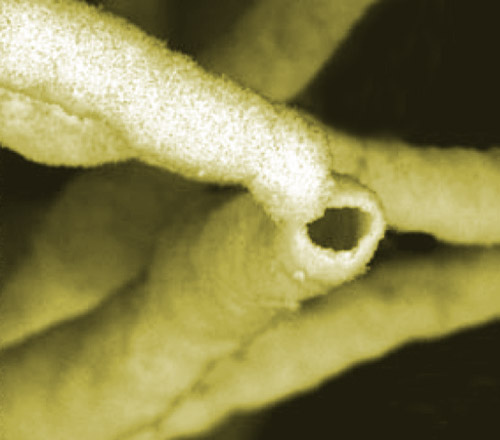
Penicillium citreonigrum

P. citreonigrum is not a commonly isolated species, but it is widely distributed.P. citreonigrum grows in rice after harvest, when the moisture content reaches 14.6%. At 1% higher moisture, other fungi will overgrow it, so the moisture band for invasion is narrow. The fungus is reported to be favoured by the lower temperatures and shorter hours of daylight occurring in the more temperate rice growing areas. The Oriental disease known as "beriberi" has traditionally been regarded as a nutritional disease, an avitaminosis. However, beriberi is more than a single disease, and one form of it, known in Japan as acute cardiac beriberi, has been established to be a mycotoxicosis. Acute cardiac beriberi in Japan is now only of historical interest. However, P. citreonigrum and Citreoviridin may still occur in other parts of Asia. Citreoviridin is also produced by P. ochrosalmoneum

Characteristics
Shape and Size
25-30 mm,irregular in shape
Genome Information
genome not found
Food Source
rice
Pathological Factor
P. citreonigrum produces citreoviridin, the cause of acute cardiac beriberi.Citreoviridin is an unusual molecule consisting of a lactone ring conjugated to a furan ring, with a molecular weight of 402 (Cole and Cox, 1981). It is a neurotoxin, acutely toxic to mice, with intraperitoneal and oral LD50s of 7.5 mg/kg and 20 mg/kg respectively
Disease
Acute cardiac beriberi
Symptoms
Citreoviridin caused vomiting, convulsions, ascending paralysis and repiratory arrest. Less frequent signs were reported to be ataxia, enforced movements or stiffness in the extremities, and later cardiovascular disturbance, flaccid paralysis and hypothermia
Affected Body Organs
CNS, mucles

Classification
Kingdom Fungi
Phylum Ascomycota
Class Eurotiomycetes
Subclass Eurotiomycetidae
Order Eurotiales
Family Trichocomaceae
Genus Penicillium
Species P. Citreonigrum