 |
Database of Biochemical Tests of Pathogenic Enterobacteriaceae Family A tool to identify microbes using minimal biochemical tests |
|
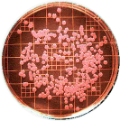
Escherichia coli
| About Organism | Show All Tests | Show Unique Test Hierarchy |
Details
| Description | E.coli is a Gram-negative, facultatively anaerobic, rod-shaped bacterium of the genus Escherichia that is commonly found in the lower intestine of warm-blooded organisms.E. coli is the most widely studied prokaryotic model organism, and an important species in the fields of biotechnology and microbiology, where it has served as the host organism for the majority of work with recombinant DNA. Under favorable conditions, it takes only 20 minutes to reproduce. |
| Synonyms | na |
| Habitat/Source | Gastrointestinal (GI) tract of humans and many of the warm blooded animals. |
| Pathogenicity | Most E. coli strains are harmless, but some serotypes can cause serious food poisoning in their hosts.The harmless strains are part of the normal flora of the gut, and can benefit their hosts by producing vitamin K2,and preventing colonization of the intestine with pathogenic bacteria. |
| GenBank Accession | View Genome [NC_002695.1] |
| Size(Mb) | 5.5 |
| GC% | 50.5 |
| Genes | 5360 |
| CDS | 5204 |
| Reference | 1.Bergey, D. H., Buchanan, R. E., Gibbons, N. E., (1974). Bergey's manual of determinative Bacteriology. 8th. EditionEdited by R. E. Buchanan, The Williams & Wilkins Co.. 2.Bergey's Manual of Determinative Bacteriology (9th Edition,p.209,Table 5.2).Edited by John G. Holt,The Williams & Wilkins Co.. |