 |
Database of Biochemical Tests of Pathogenic Enterobacteriaceae Family A tool to identify microbes using minimal biochemical tests |
|
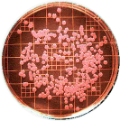
Escherichia hermannii
| About Organism | Show All Tests | Show Unique Test Hierarchy |
Details
| Description | This microbe is a Gram negative rod-shaped bacterium commonly found in the wounds and feces of warm-blooded animals. The rods occur singly or in pairs and can be motile by peritrichous flagella. Before being recognized as a unique species, isolates were known as Enteric Group 11. Growth occurs optimally at 35-37 C. It is primarily an opportunistic pathogen (only causes disease in weakened hosts). Reported diseases include septicemia, purulent conjunctivitis, periodontal lesions, neonatal brain infections, meningitis, and wound infection. |
| Synonyms | na |
| Habitat/Source | Wounds and feces of warm-blooded animals. |
| Pathogenicity | It is primarily an opportunistic pathogen (only causes disease in weakened hosts). |
| GenBank Accession | View Genome [NZ_BAFF00000000.1] |
| Size(Mb) | 4.5 |
| GC% | 54.1 |
| Genes | 4161 |
| CDS | 4025 |
| Reference | Brenner, D. J., Davis, B. R., Steigerwalt, A. G., Riddle, G. F., McWhorter, A. S. S., Farmer, J. J., Saitoh, J., Fanning, G. R. (1982). Atypical biogroups of Escherichia coli found in clinical specimens and description of Escherichia hermannii sp. nov. J.Clin.Microbiol. 15 : 703-713 . 2.Bergey's Manual of Determinative Bacteriology (9th Edition,p.210,Table 5.2).Edited by John G. Holt,The Williams & Wilkins Co.. |