 |
Database of Biochemical Tests of Pathogenic Enterobacteriaceae Family A tool to identify microbes using minimal biochemical tests |
|
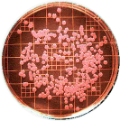
Salmonella enterica subsp.salamae
| About Organism | Show All Tests | Show Unique Test Hierarchy |
Details
| Description | This new subspecies was previously Salmonella group 2. It contains atleast 488 serovars (Popoff et al., 1998). |
| Synonyms | Salmonella salamae; Salmonella enterica subsp. II; Salmonella enterica serovar II; Salmonella enterica II; Salmonella choleraesuis subsp. salamae; Salmonella cholerae-suis subsp. Salamae. |
| Habitat/Source | Isolated mainly from cold-blooded animals and environment. The microbe is typically associated with cold-blooded animals but can be an occasional pathogen in man and other animals. It is noted that turtles,snakes,iguanas and lizards may all carry Salmonella enterica subsp. Salamae. |
| Pathogenicity | Although it is generally believed that cold-blooded animals are the major reservoir of S. enterica subsp. salamae, it is also important to consider food-borne infections. If it is assumed that such cases are always sporadic infections from reptiles, either directly or indirectly,they may never be reported to the relevant public health authorities. Salmonella enterica subsp. salamae can still cause gastroenteritis and occasionally systemic disease in warm-blooded hosts. It may also be responsible for severe infection in the young,very old or immunocompromised patients who then require hospitalization (Angulo & Swerdlow, 1995; CDC,1999). |
| GenBank Accession | View Genome [NZ_CAFD00000000.1 ] |
| Size(Mb) | 5.12 |
| GC% | 51.8 |
| Genes | 4985 |
| CDS | 4641 |
| Reference | L, Le Minor, Véron M, Popoff M. (1982). "A proposal for Salmonella nomenclature." Annales de microbiologie 1982,133 (2): 245-54. (2) Bergey's Manual of Determinative Bacteriology Edited by John G. Holt,The Williams & Wilkins Co.. |