 |
Database of Biochemical Tests of Pathogenic Enterobacteriaceae Family A tool to identify microbes using minimal biochemical tests |
|
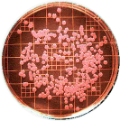
Yersinia enterocolitica
| About Organism | Show All Tests | Show Unique Test Hierarchy |
Details
| Description | "Yersinia enterocolitica"This species is a food and waterborn pathogen that causes gastroenteritis (inflammation of the mucous membranes of the stomach and intestine). It is able to proliferate at temperatures as low as 4 C. This species is comprised of nonpathogenic strains and pathogenic strains that exclusively contain the plasmid pCD1/pYv. |
| Synonyms | Bacterium enterocoliticum |
| Habitat/Source | Yersinia enterocolitica is widespread in nature,occurring in reservoirs ranging from the intestinal tracts of numerous mammals,avian species,cold-blooded species, and from aquatic niches.Most environmental isolates are avirulent;however,isolates recovered from porcine sources contain human pathogenic serogroups.Yersinia enterocolitica, a pathogen of deer and cattle spreads to humans via contaminated drinking water. |
| Pathogenicity | Yersinia enterocolitica causes diarrhea,terminal ileitis, mesenteric lymphadenitis,autoimmune arthritis,abscesses,and septicemia in humans. It causes the disease yersiniosis,which is an animal-borne disease occurring in humans,as well as in a wide array of animals such as cattle, deer, pigs, and bird. Human pathogenic strains are usually confined to the intestinal tract and lead to enteritis/diarrhea.Yersinia enterocolitica enters via the Peyer's patches following ingestion of contaminated water or food and cause severe liver and splenic abscesses. |
| GenBank Accession | View Genome [NC_008800.1 ] |
| Size(Mb) | 4.68362 |
| GC% | 47.25 |
| Genes | 4259 |
| CDS | 4023 |
| Reference | (1) Frederiksen W (1964) Frederiksen, W. "A study of some Yersinia pseudotuberculosis-like bacteria (Bacterium enterocoliticum and Pasteurella X)." Proc. XIV Scand. Cong. Pathol. Microbiol. (1964). pp. 103-104. Universitetsforlaget, Oslo. (2) Bergey's Manual of Determinative Bacteriology (9th Edition,p.220,Table 5.2).Edited by John G. Holt,The Williams & Wilkins Co.. |